


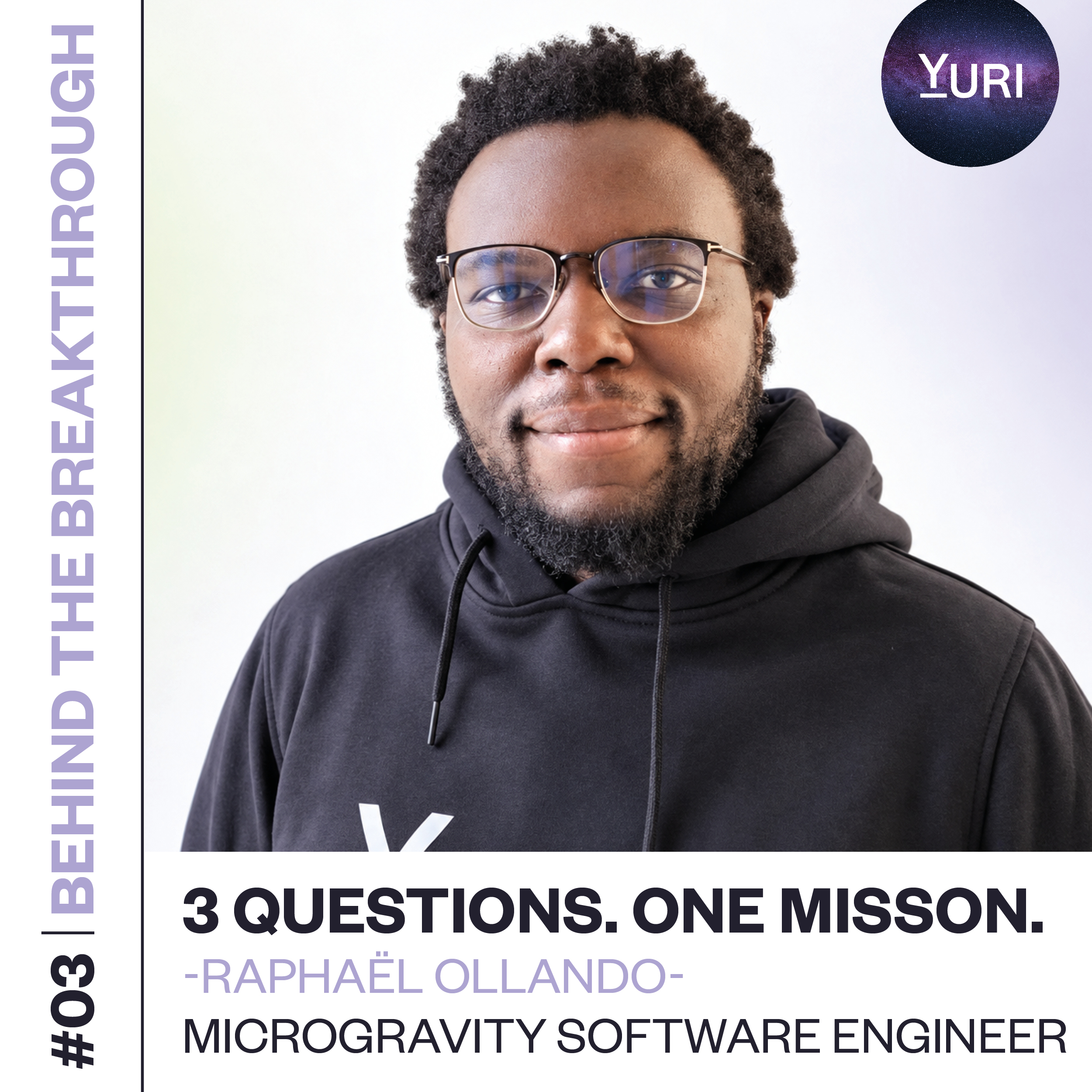
#3 Raphaël Ollando - Microgravity Software Engineer
𝗕𝗘𝗛𝗜𝗡𝗗 𝗧𝗛𝗘 𝗕𝗥𝗘𝗔𝗞𝗧𝗛𝗥𝗢𝗨𝗚𝗛
3 questions. One perspective. Zero gravity.
Raphaël's work is about making complex experiments run reliably and autonomously in space, from controlling processes and responding to changing conditions to enabling remote operations and turning Yuri’s hardware into scalable, repeatable research platforms.
💬 𝟬𝟭 | 𝗪𝗵𝗮𝘁 𝗶𝘀 𝘁𝗵𝗲 𝗱𝗶𝗳𝗳𝗲𝗿𝗲𝗻𝗰𝗲 𝗯𝗲𝘁𝘄𝗲𝗲𝗻 𝘄𝗿𝗶𝘁𝗶𝗻𝗴 𝘀𝗼𝗳𝘁𝘄𝗮𝗿𝗲 𝗳𝗼𝗿 𝗮 𝗻𝗼𝗿𝗺𝗮𝗹 𝗹𝗮𝗯𝗼𝗿𝗮𝘁𝗼𝗿𝘆 𝗱𝗲𝘃𝗶𝗰𝗲 𝗮𝗻𝗱 𝘀𝗼𝗳𝘁𝘄𝗮𝗿𝗲 𝘁𝗵𝗮𝘁 𝘄𝗶𝗹𝗹 𝗼𝗽𝗲𝗿𝗮𝘁𝗲 𝗮 𝗹𝗮𝗯𝗼𝗿𝗮𝘁𝗼𝗿𝘆 𝗶𝗻 𝗼𝗿𝗯𝗶𝘁?
"Writing software for an in-orbit device is completely different from writing software for ground-based equipment. It is much more comparable to developing software for a car or an aircraft.
It is mission-critical because there is usually no possibility to simply restart the experiment, replace the hardware or easily apply a fix if something goes wrong.
Experiments can be worth hundreds of thousands or even millions of euros, and often there is only one opportunity to get them right. That is why we account for a wide range of possible failure scenarios, follow development practices designed for safety-critical applications, and perform extensive verification and validation."
💬 𝟬𝟮 | 𝗛𝗼𝘄 𝗱𝗼 𝘆𝗼𝘂 𝗺𝗮𝗸𝗲 𝗮𝘂𝘁𝗼𝗺𝗮𝘁𝗶𝗼𝗻 𝗳𝗹𝗲𝘅𝗶𝗯𝗹𝗲 𝗲𝗻𝗼𝘂𝗴𝗵 𝘁𝗼 𝘀𝘂𝗽𝗽𝗼𝗿𝘁 𝘃𝗲𝗿𝘆 𝗱𝗶𝗳𝗳𝗲𝗿𝗲𝗻𝘁 𝗯𝗶𝗼𝗹𝗼𝗴𝗶𝗰𝗮𝗹 𝗲𝘅𝗽𝗲𝗿𝗶𝗺𝗲𝗻𝘁 𝗽𝗿𝗼𝘁𝗼𝗰𝗼𝗹𝘀?
"It starts with the hardware. We first make sure it is modular enough to accommodate different types of experiments, and then design the software around that architecture.
From a software perspective, it comes down to careful architecture and abstraction. Modular software components and minimal hardcoding mean that adapting the system to a new experiment can often be as simple as changing a configuration file and, where necessary, adding a few new modules without modifying the rest of the system."
💬 𝟬𝟯 | 𝗪𝗵𝗶𝗰𝗵 𝘀𝗼𝗳𝘁𝘄𝗮𝗿𝗲 𝗰𝗮𝗽𝗮𝗯𝗶𝗹𝗶𝘁𝘆 𝗶𝘀 𝗺𝗼𝘀𝘁 𝗶𝗺𝗽𝗼𝗿𝘁𝗮𝗻𝘁 𝗳𝗼𝗿 𝗺𝗮𝗸𝗶𝗻𝗴 𝗳𝘂𝘁𝘂𝗿𝗲 𝗺𝗶𝗰𝗿𝗼𝗴𝗿𝗮𝘃𝗶𝘁𝘆 𝗲𝘅𝗽𝗲𝗿𝗶𝗺𝗲𝗻𝘁𝘀 𝘀𝗰𝗮𝗹𝗮𝗯𝗹𝗲 𝗮𝗻𝗱 𝗿𝗲𝗽𝗲𝗮𝘁𝗮𝗯𝗹𝗲?
"For me, it comes down to making sure that our software is configurable, automated and traceable.
As explained earlier, configurability is key, but on top of it we need to automate the workflow itself. Running an experiment is rarely a simple A-B-C-D sequence, but rather a complex workflow with many possible scenarios. And that requires a dedicated "engine" that handles that complexity, so that a scientist's new idea for an experiment, or a change in a process, doesn't mean adding thousands of new lines of code.
Traceability is equally important. If one experiment fails while another succeeds, we need to understand exactly what happened by tracing the sequence of events, parameters and configurations that led to the result."